
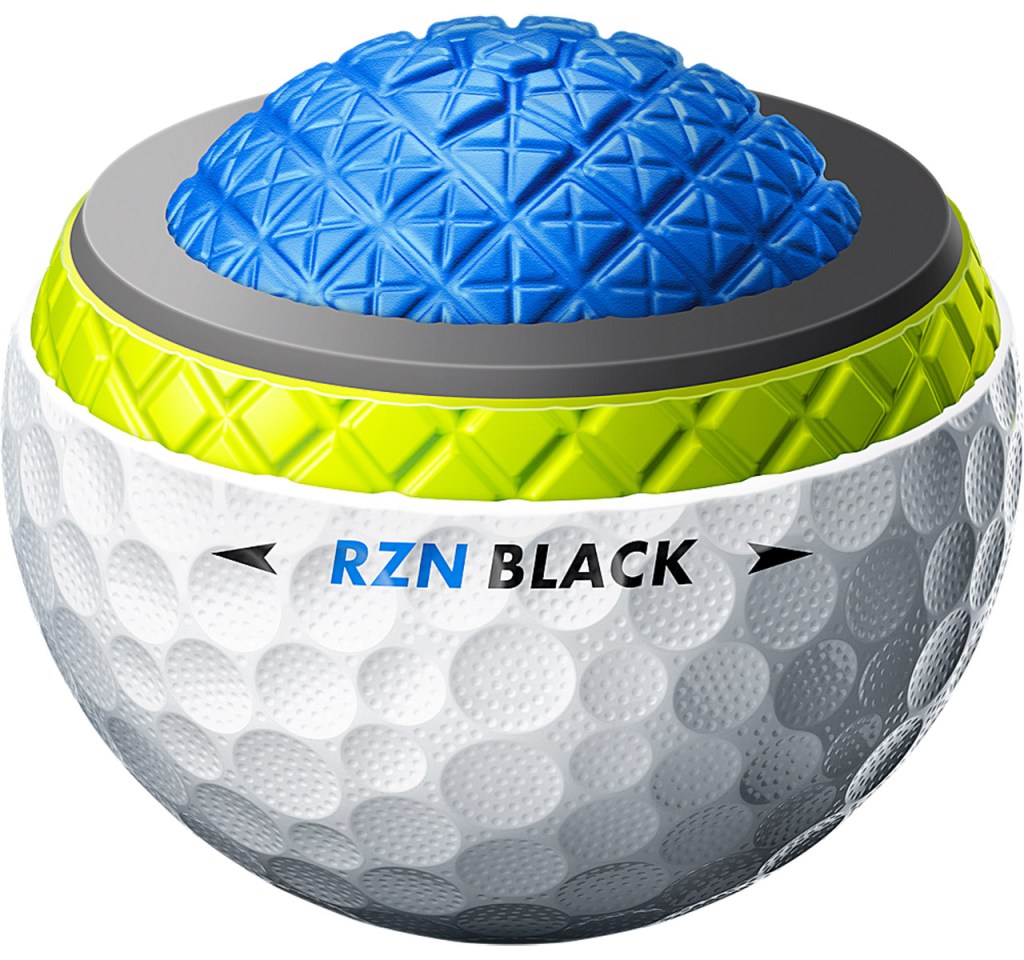
First of all, it’s unbelievable how bad Nike equipment had to be for them to totally exit the golf business with ads and pictures like that. I mean in 2014 did that not look like the coolest golf ball ever made? That thing looks like it could take a lob wedge into the stratosphere. But that’s the thing with advertisements, being the best at marketing and advertising doesn’t mean you make the best equipment or know what’s best for your customers. But still, I mean f*** me that ball looks so sick.
I work in my spare time as an equipment expert for a pretty well-known manufacturer of golf equipment, they might even say they’re #1 in golf. I’d give a hint but it doesn’t rhyme with anything (….Orange Golf Company?). I’m on their site a few hours a week answering questions about club fitting and ball fitting, having been lucky enough to be on staff with this company when I was a green grass golf professional. One of the questions I still get FAR too often is, “what’s the compression of this golf ball?” This is one of the biggest myths that needs to be addressed and talked about more often is that you need to fit your swing speed with the compression of the golf ball. So over the next few paragraphs I’m going to go through the most common questions and concerns I’ve heard about compression over my years as a golf professional, and try to debunk them once and for all. I’m also going to be quoting MyGolfSpy and their compilation of FAQ’s about compression from their page charting all of the balls they tested and their compression ratings, so I’ll link that page at the end of this article. Being independent third-party testing I truly believe the information at MGS is the best in the business. Nobody there is trying to sell you anything without recommending you testing it for yourself first. Anyone who tells you, over anything else, that you need to test it for yourself before you buy it like they do over there can’t sell you anything that doesn’t work for your unique swing and golf game, and that’s an extremely trustworthy source. Also, when you extensively test and re-test every single ball on the market multiple times over with every swing imaginable and feedback from a variety of golfers, you tend to learn a thing or two about how they perform versus what they measure on the charts.
“My swing speed isn’t fast enough to compress that ball, I can’t play that, I need something softer…”
This is the one I probably hear most often, and the biggest myth that needs busting about how golf balls perform, that softer balls go higher or spin more than more firm models. At the most recent private club I was employed, like most in the country, we sold quite a lot of Titleist golf balls. The ProV1x has always been known as one of the most firm and one of the higher compression balls on the market. As such, there are far too many out there that believe their swing isn’t fast enough to compress it properly. I can promise you that if every single one of the lady members we had at my last club can compress the ProV1x, if I can compress it with a chip shot 5 yards away from the green, you can compress it with absolutely any swing speed. From MyGolfSpy, “At swing speeds as low as 60mph you are compressing the core of the golf ball.“ I think it’s actually a lot slower than that, but the fact remains that with the modern materials we make golf balls with these days, you don’t need swing speed to play a higher compression ball. These days the higher compression balls are also the highest spinning and the highest launching balls on the market. Being that way, they can also be better for the slower swing speeds, especially slow-ing swing speeds, with the tendency of these balls to launch the highest and spin most replacing a lot more of that launch and spin that was lost with the decreasing swing speeds. On the other hand, you have balls like the PXG Xtreme, one of the most firm compression ratings, with nowhere near the same high launch and spin that the ProV1x offers. You also have the Titleist AVX, one of the softest premium balls on the market, also one of the lowest launching and spinning balls on the market, and the Callaway Chrome Soft with similar compression ratings, marketed and playing as a much higher launching and spinning ball. That is because ball flight is affected by dimple pattern, not by compression or the inner working of the ball, and spin is only limited by how soft the ball is, meaning the softer a ball is the more limit is put on the spin it can create. Long story short, compression alone tells you absolutely nothing about how a ball will perform in those all-important launch and spin categories, more firm golf balls don’t fly lower or spin less, soft balls (lol) don’t launch higher or spin more. There is no industry standard or equipment standard that all of these even need to be measured with, or any guidelines that need to be followed when testing. Any manufacturer that tells you simply your certain swing speed means you should play a certain ball because of how it feels or the compression rating, or you need a certain swing speed to be able to play a golf ball, is trying to sell you something and should not be trusted on the surface.
“I have a slower swing speed, 85mph max with the driver, I need a softer ball for more distance…”
This is the second time I’ll directly quote MGS, with their quote on ball speed versus compression: “As we discovered in our first robot ball test, soft is slow. That is to say that lower compression balls are slower off the driver.” This is true no matter your swing speed, lower compression balls are not faster for slower swing speed players versus a higher compression ball. Obviously for faster swing speed players this would translate to a more significant loss in distance, but that is true with slower swing speeds as well, softer balls are slower for all players across the board. Ball speed directly translates into distance, if you want more distance with the driver, you need more ball speed, you need a more firm ball to be able to handle that ball speed and extra energy you want to translate from your club to the ball. No matter how fast or slow your swing speed, generally speaking the more firm the ball, the more energy it can store, and the more potential distance it can create for you.
In conclusion, and just like everything I post here on my site, a second set of eyes and an expert opinion can make all the difference in selecting the right equipment for your game. Compression is a myth when it comes to ball fitting, compression alone is a fraction of a fraction of the information you need to select the right ball for your game, to the point these days it shouldn’t be taken into consideration with all the confusion it causes. Don’t trust compression ratings, trust what the ball does on the course, don’t commit to a ball without testing it with your game first!
External Link/Citation:
https://mygolfspy.com/news-opinion/golf-ball-compression-guide/

 Green Grass Golf Shop
Leave a comment